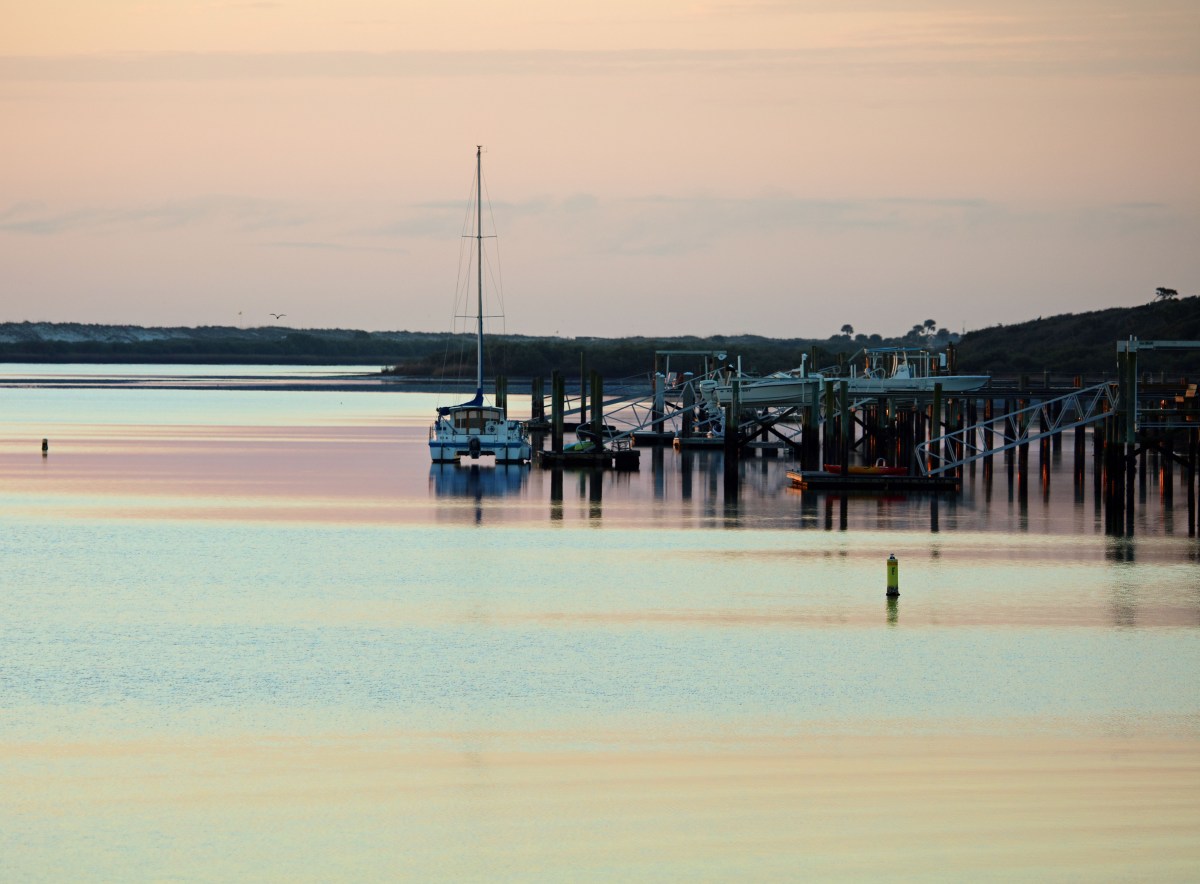
Sun-gilded landing
Is mirrored in pastel waters,
While unhurried musings drift
Toward the creek’s final bend.
Sun-gilded landing
Is mirrored in pastel waters,
While unhurried musings drift
Toward the creek’s final bend.

I am a break-of-day photographer who lives at the edge of land in St. Augustine, Florida. Since moving here, I have become drawn to moored sailboats in our small harbors that open into the vastness of the Atlantic. My attraction is related to a notion I have of man’s boundless curiosity that has historically driven him to undertake dangerous, far-ranging seagoing adventures.
The best time to capture this mood with my camera, I have learned, is during the brief period before and after the sun rises on days of partly clear skies and gentle winds. The sun’s light is not blindingly bright then, and its position is low, horizontal to objects on the water and beneath the clouds, resulting in deepened colors, highlighted shadows, long reflections in still waters, and, when I am lucky, an arresting photo.

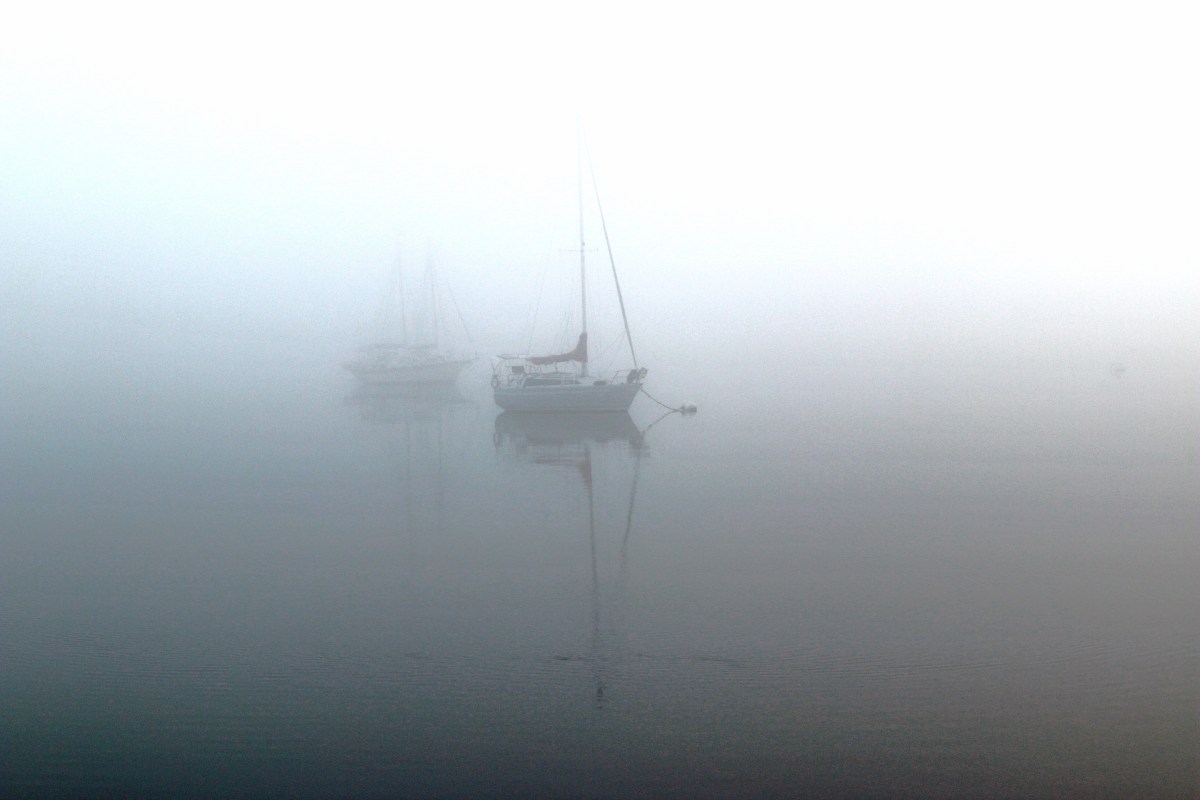
The harbor is fog-filled this morning. Ghost ships come in and out of view on Matanzas Bay – first one boat, then another, and then the first again – as the mist swirls and meanders southward. The Bridge of Lions and the boats moored further out are but vaguely defined at best, and I begin to entertain unanswerable questions relating to existence and reality.
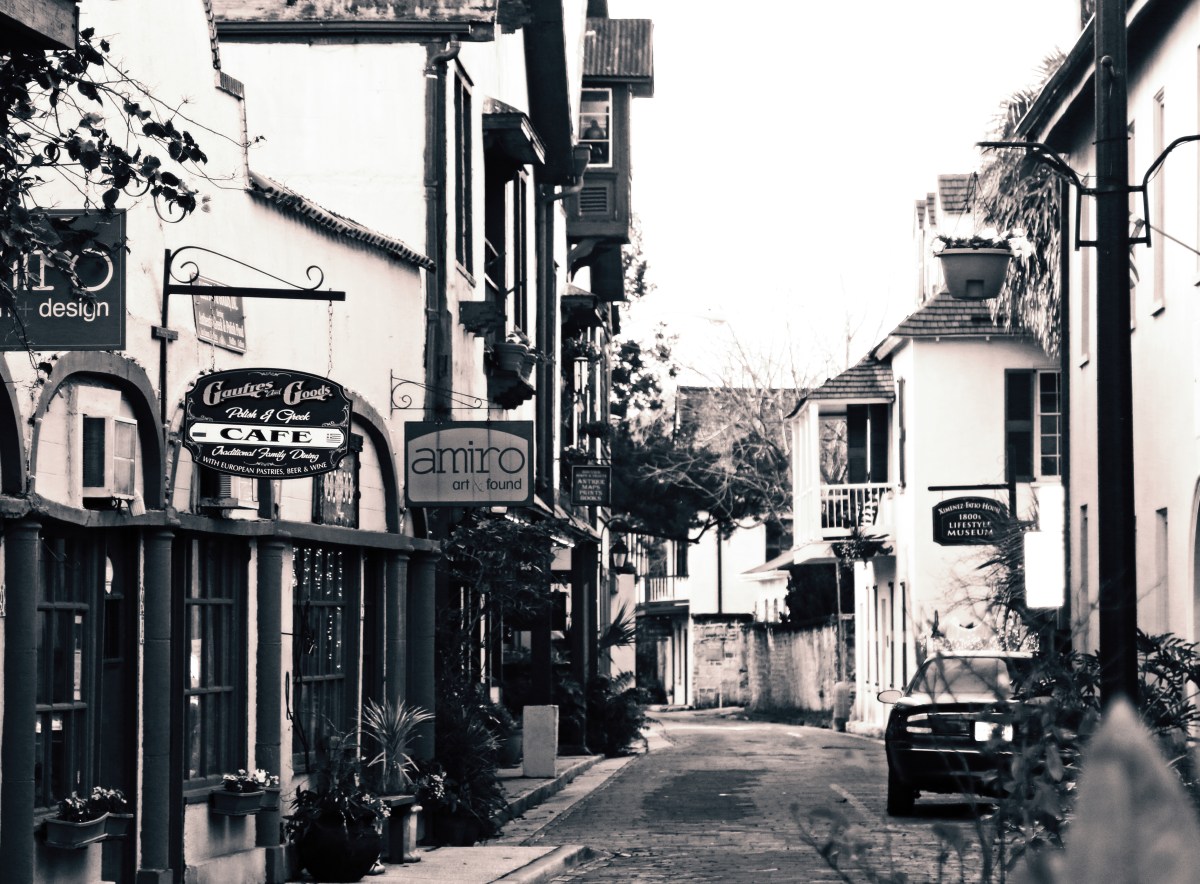
Strolling Aviles Street early this Friday morning, I am transported to an unhurried peaceful time of long ago, a sensation that would be denied to me by eleven A.M. when tourists beyond easy count fill the sidewalk and street, reading the menus of restaurants, browsing antique shops and galleries, and making way for the long trolley trains gliding by with drivers reciting historical details of 16th Century Spanish rule through microphones to their passengers packed in behind them.

Only one car passed me going the other way on Charlotte Street as I walked gingerly along the narrow, unevenly-bricked lane, navigating the numerous puddles from the rain earlier that morning. Because there wasn’t a sidewalk, I had to edge toward the side of the road and lean against a building, where I managed to avoid any spray from the passing vehicle. Alone again, I brushed off the back of my pants where they had touched the cold damp stone and pushed on, eventually making out the gallery up ahead, which was illuminated by the sun rising in the now cloudless sky to my left.
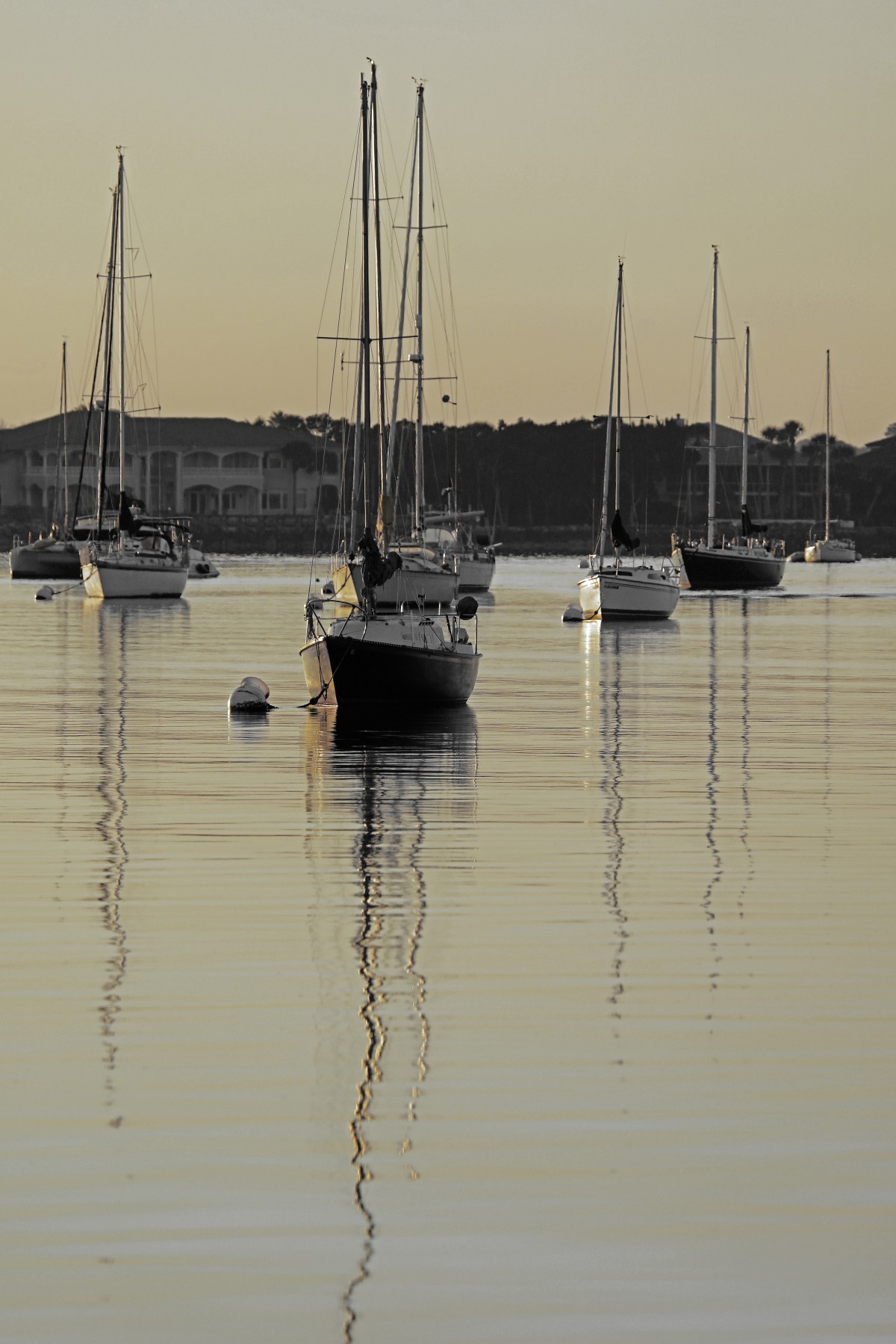
If I had to choose, I would take the ketch, which is moored farther away from me toward the bay’s eastern shore, for I am partial to the lines of older boats and especially so to two-masted ones. But – honestly? – any one of them would suit my purpose at this particular moment.
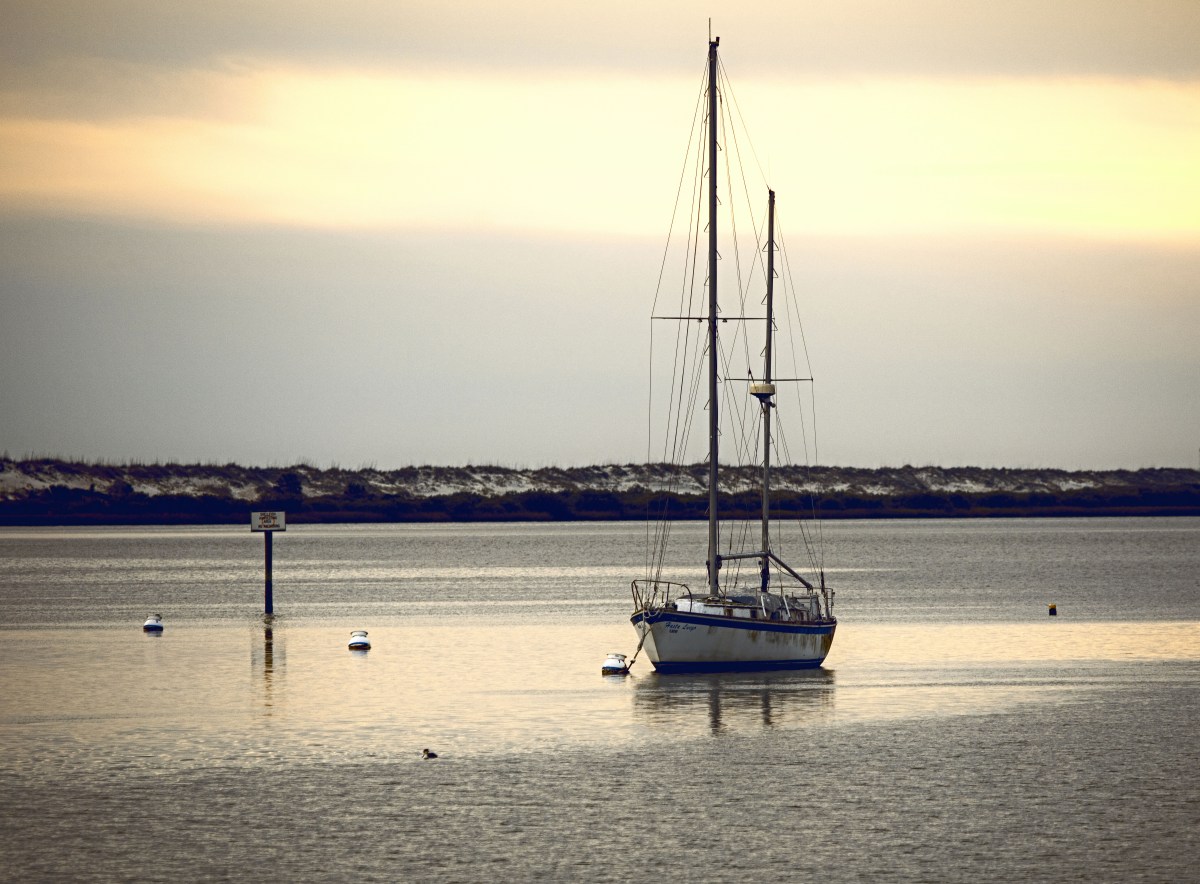
On at least one star-filled morning each month, I can be found elbow-supported, wooden-railing leaning at the end of the Lighthouse Pier where I gaze toward the sand-duned line along the southernmost end of Salt Run. There, by the light of a sun that has yet to crest those sandy ridges, night’s quiet transformation into day occurs so swiftly that my brain can but register its changes as stop motion animation: changes in the sky where yellow intrudes upon dark charcoals, diluting them into steely blues; changes that brighten and polish smooth patches of water so that channel markers and mooring floats might reflect upon their states; and changes that shear night’s veil guarding a secured ketch till the boat’s emerging beauty seduces me once again.
The sun rises to the south in St. Augustine during the winter. On cloudless mornings then, once the sun clears the trees that line the shore on Anastasia Island, it brightens and burnishes the south side of the Bridge of Lions in a manner that brings to my mind the bridge over River Itchen by the gates of the Royal Court of Arthur.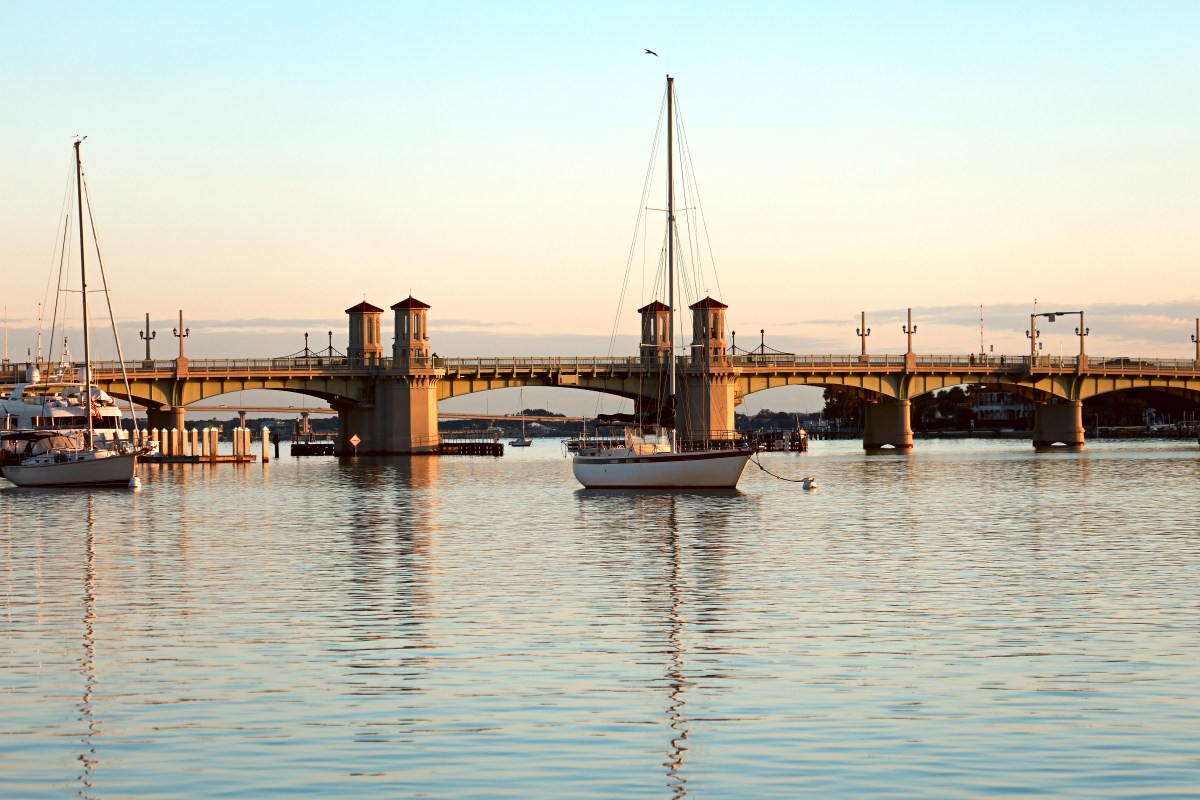

Someone has tied up a skiff at the southern end of the marina flood wall. It sits hard aground in the outgoing tide amidst sea grasses and rocks. It has no oar locks, so whoever brought it to shore likely used a small outboard and then took it with him for safe keeping (a two horsepower motor can weigh as little as 30 pounds). There are two to three inches of water in the hull so the boat has been here since at least Tuesday when we last we had a heavy rain. Perhaps it belongs to the captain of one of those half dozen sailboats I see moored to the southeast. I wonder where the captain is now, and I turn west to study the houses and inns that line the quay, as though I might see him hurrying along on his business, as though I might learn in which of my mind’s thousand stories he belongs.
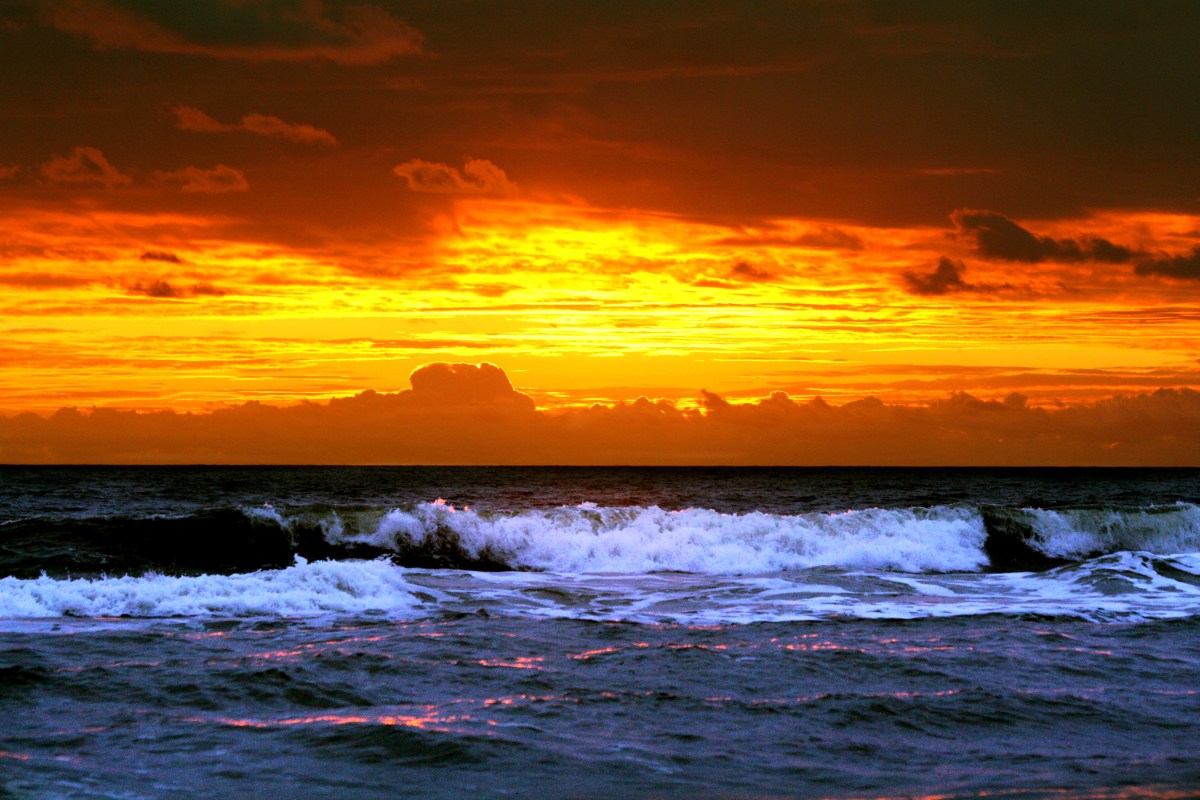
Topping the protective dune, we froze, speechless in wonder to see the birth of the day laid out before us.
*Creation

