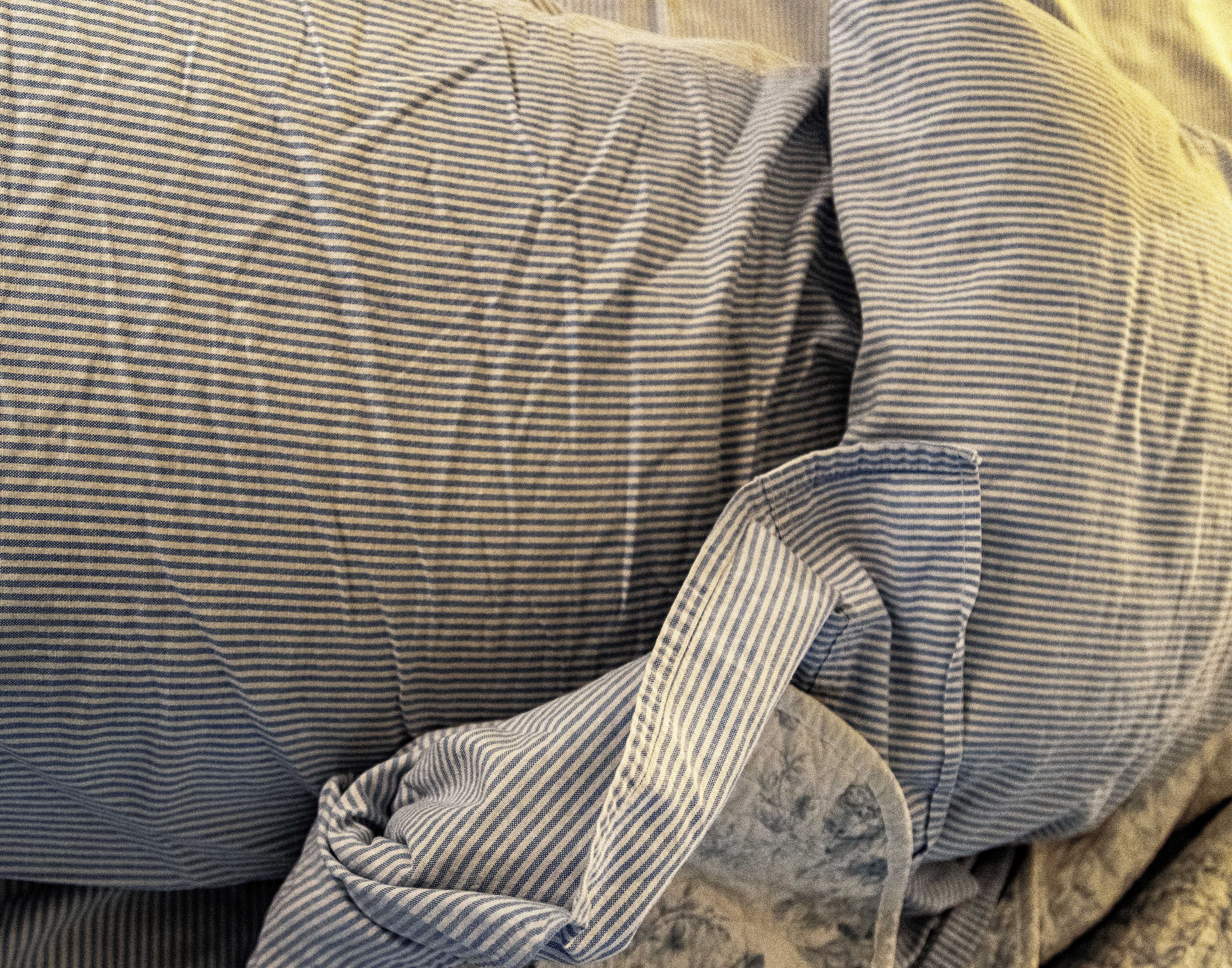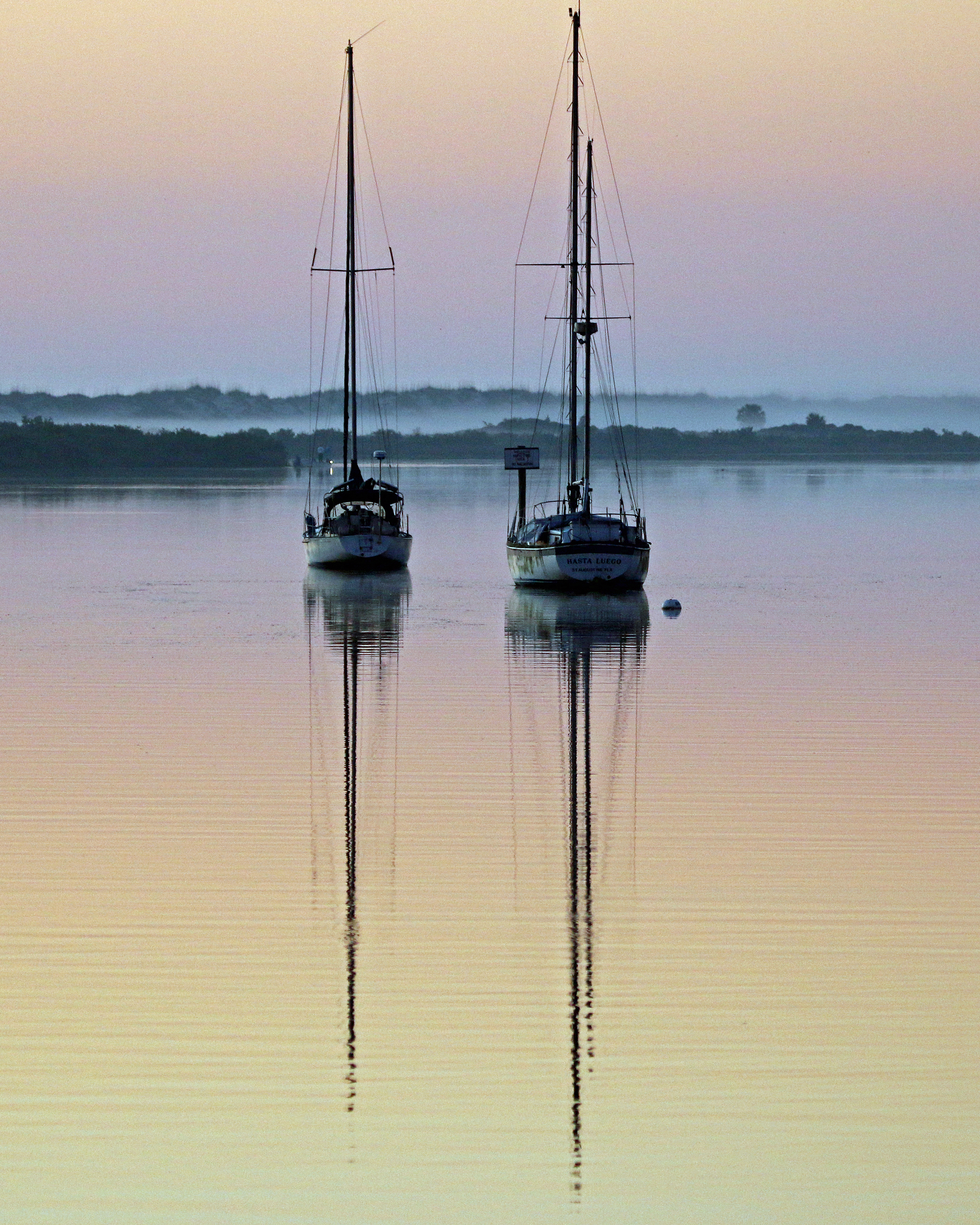
A second sleepless night, sorry and sore. Her eyes water still, her nose is raw, And her chest aches from constant coughing. She lies on her back in the pre-dawn darkness Mustering the will for what must be done.
At last, she throws off the covers and stands. Dressing is easy: her one‑piece black bathing suit, Covered by her flowered terry cloth robe. Slipping her bare feet into flip‑flops, Out the front door she steps.
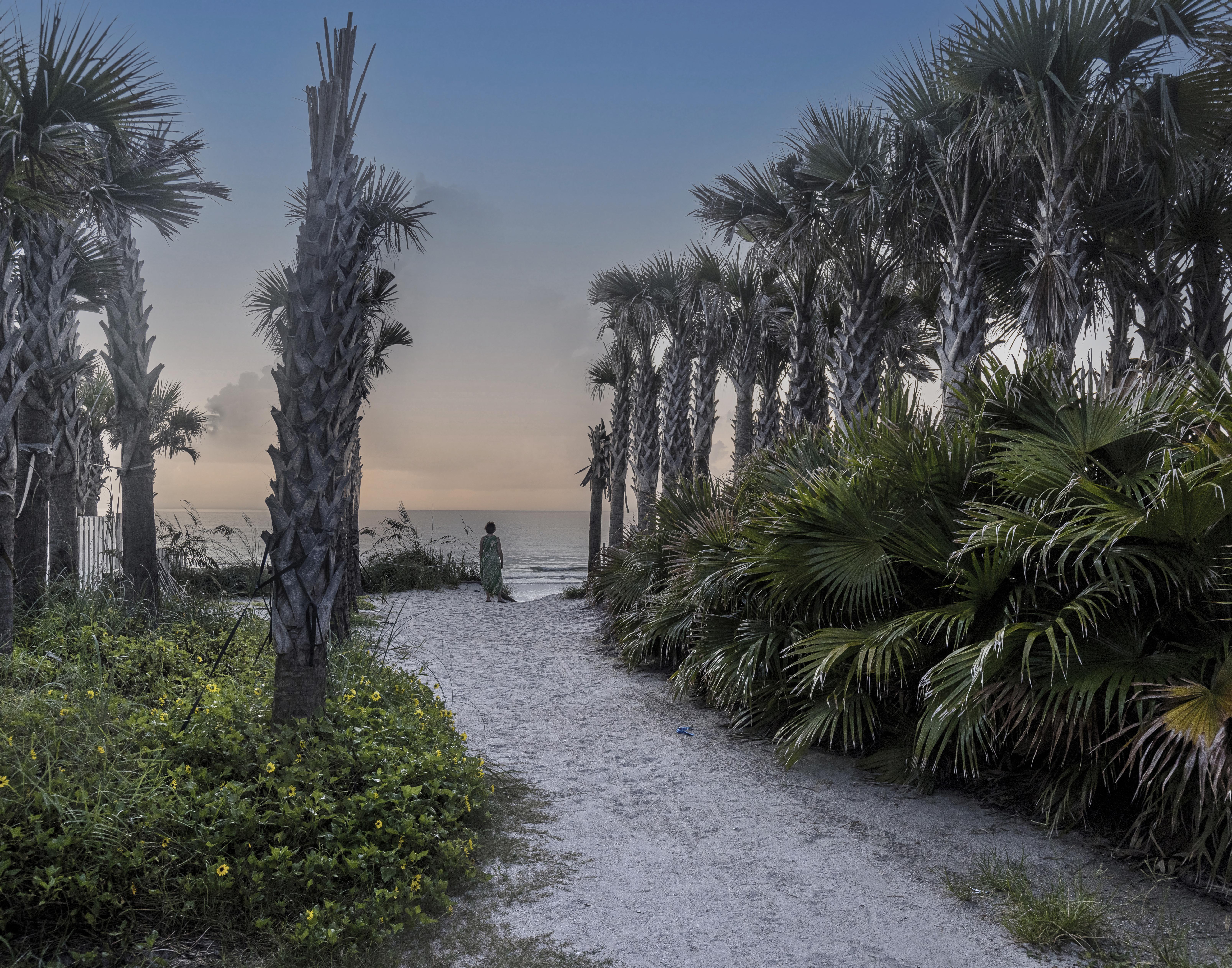
She walks east on Fifth Street with a steady gait, And crosses the quiet coastal road with ease. The pavement gives way to packed sand, Palms framing the well‑trod path. She pauses where the trail dips toward the beach And takes in the calm water beneath a pastel sky.
Now she makes her way down to the shore And slips off her robe as she goes, Letting it drop to the sand where it will. Then into the cool, calm water she wades, Not pausing until she is waist deep.
Steeling herself, she pulls her knees up to submerge. Then, surfacing, she floats, her eyes to the sky, Letting salt water linger at her nose and mouth. And now on her feet, she returns to the robe, Where she sits facing the new day, Breathing through her nose.
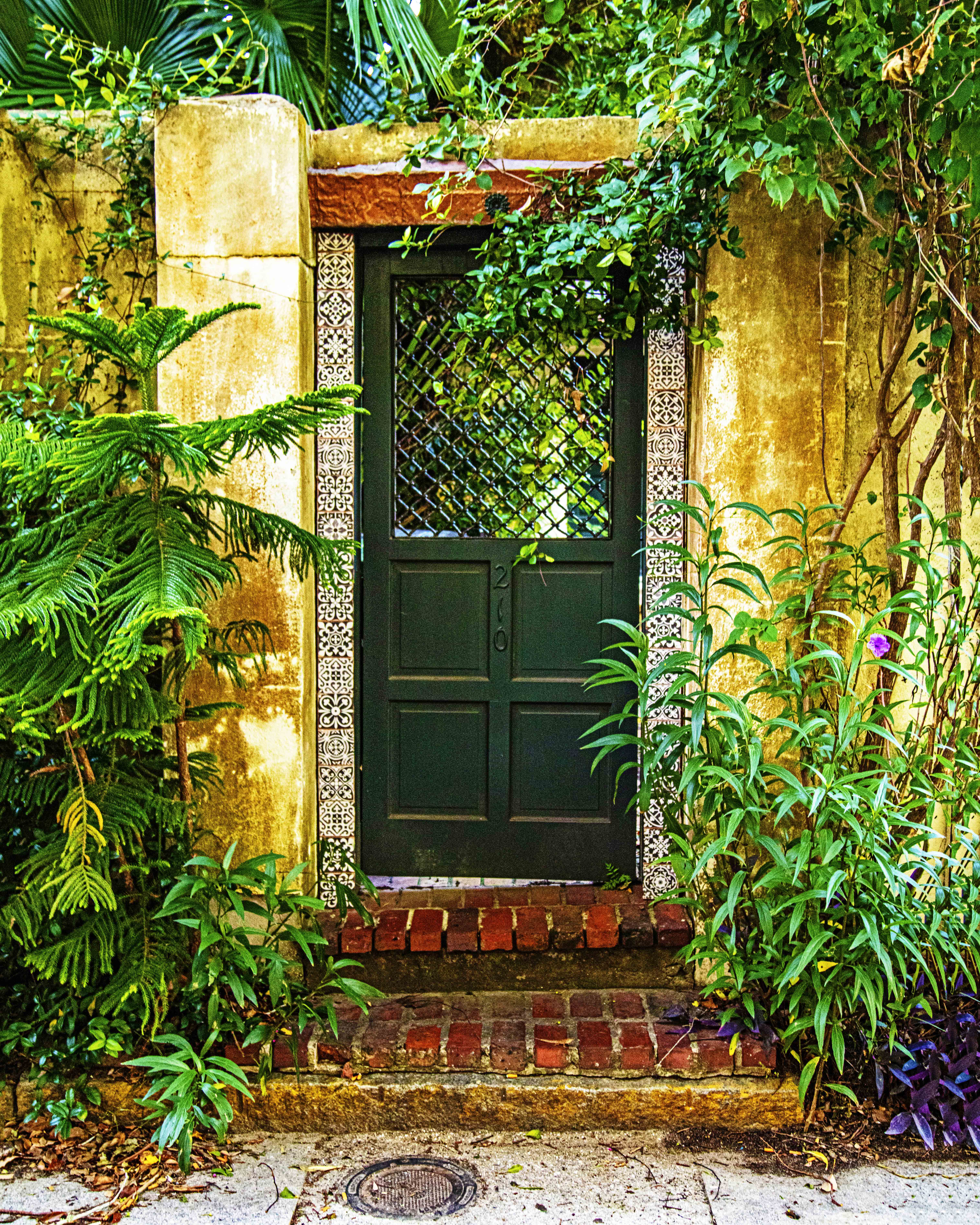
For the seventh autumn in a row, The landscaper receives a written request: Trim the foliage outside 2 Pardes Street. As before, enclosed is a generous check— An amount far greater than the task should merit.
Uneasy again, he tries to address the excess, Reaching out to The Beresit Foundation – The name embossed in gold at the top. But no address appears, no number to call, And nothing, as before, turns up in any search.
He returns to Pardes in his aging truck And tries the garden door. Locked as before. He knocks, then peers through the wire lattice mesh And waits. No answer, no footsteps, no voice. Yet the garden within is tended to perfection.
He finishes the trimming as in years before. The result is fine, though the wall still wears its grime, So, unbidden, having a cleaner and water for his next job, He washes the wall himself, free of charge.
Finished, he gathers his tools and prepares to depart, But before he leaves, he pauses to reflect on his work, And there he sees the garden door ajar.
Having stumbled upon the path, by then long lost, The elderly couple had half expected It would lead them back into town. “Maybe to the lot where we parked,” she joked.
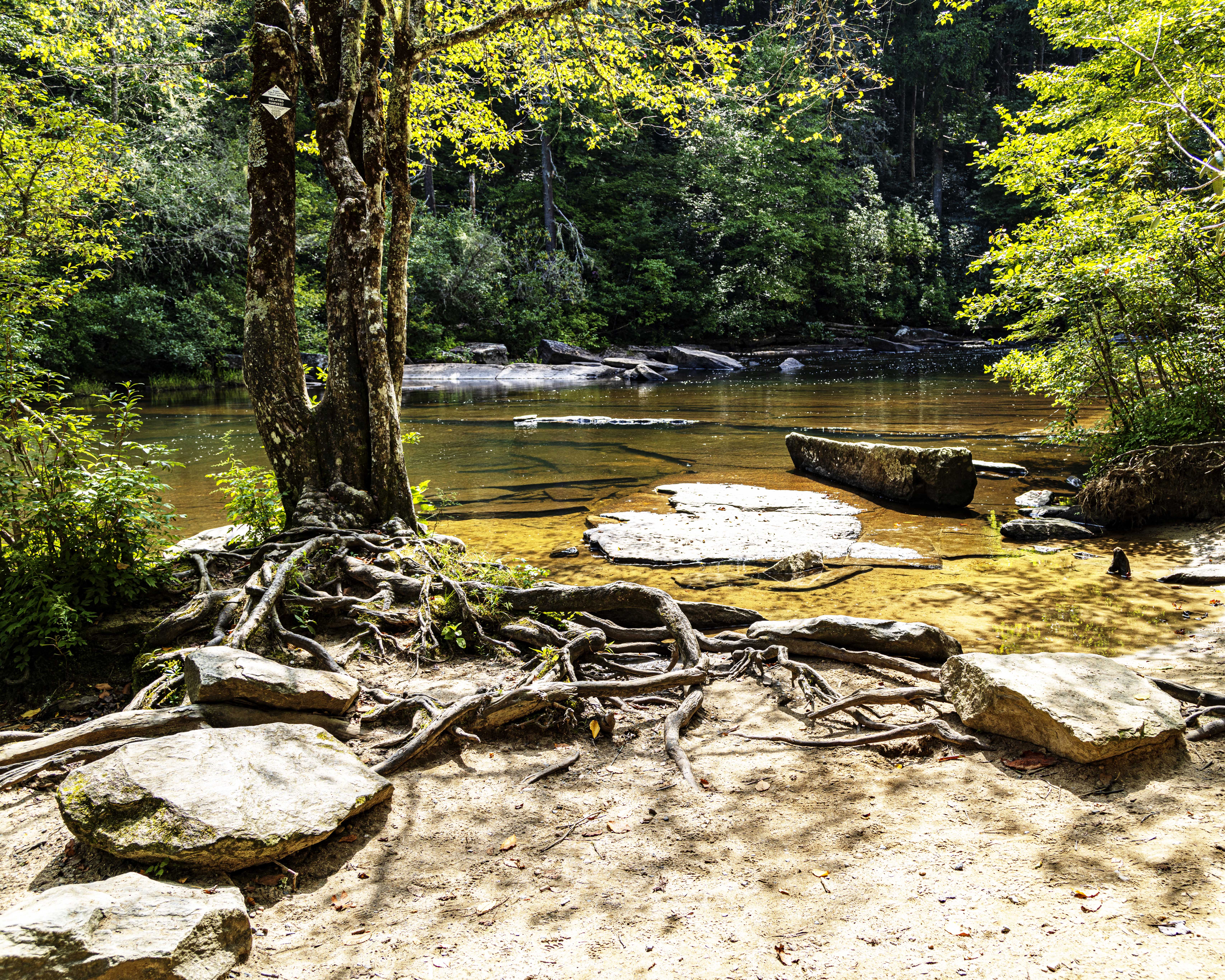
Who would have thought the path would end so sharply While still deep in the woods! And why end at a stream so wide As if the forest had drawn some line?
Two hours of wandering, Hunger and thirst rising, These woods no longer looked kind. And above them the sun threatened To set not so long from now.
Hope draining, they stand before the stream, Staring in silence but still holding hands. “Maybe the path continues on the other side,” The husband murmurs, half to himself. “Or maybe it’s deeper than it looks.”
Turning from the stream, She pulls on his arm to bring him lower. She smiles as he faces her Looking directly into her eyes. She speaks softly to her man, “Give me your best kiss, my love, Then hold my hand, tightly please, As we step into the water lightly.”
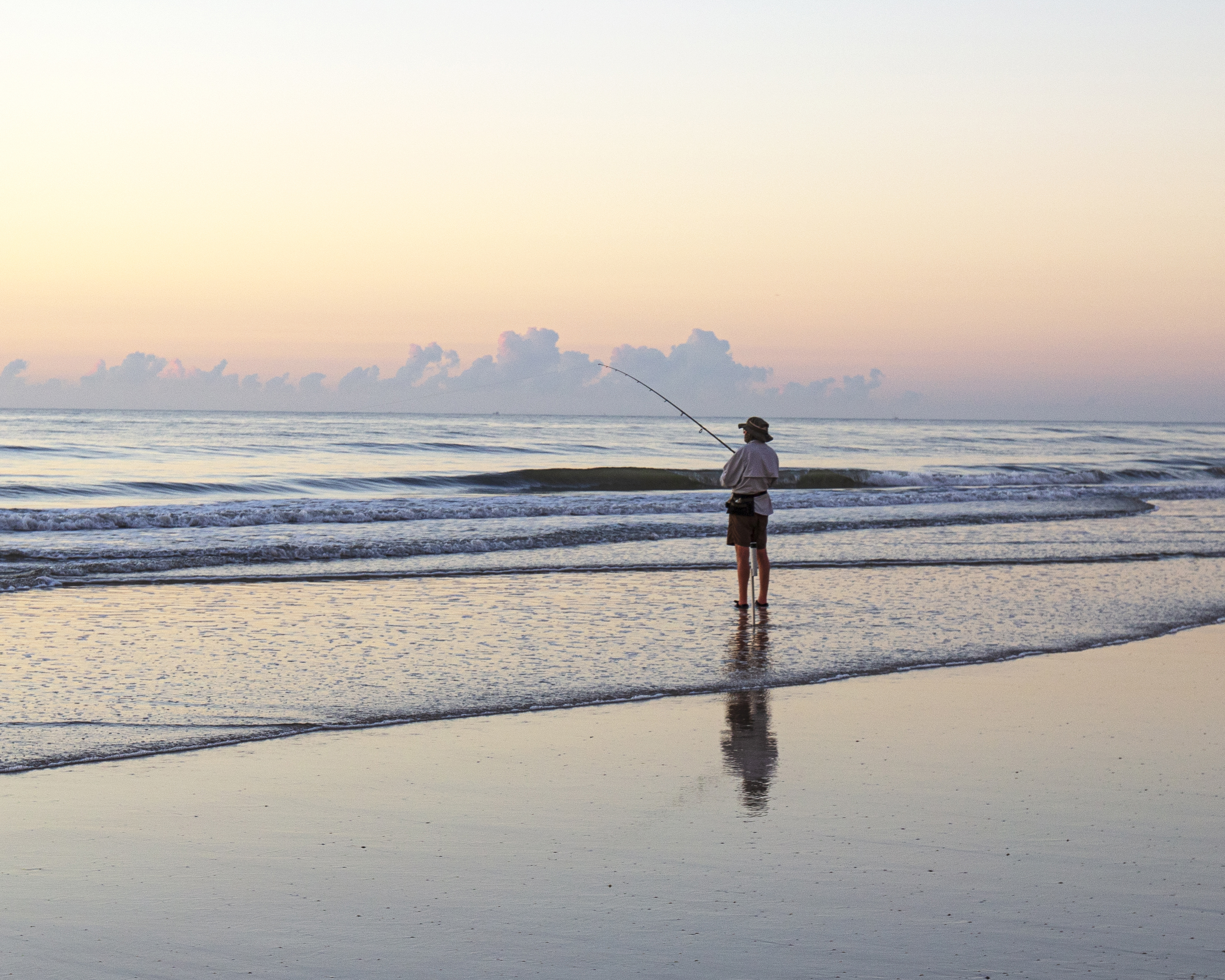
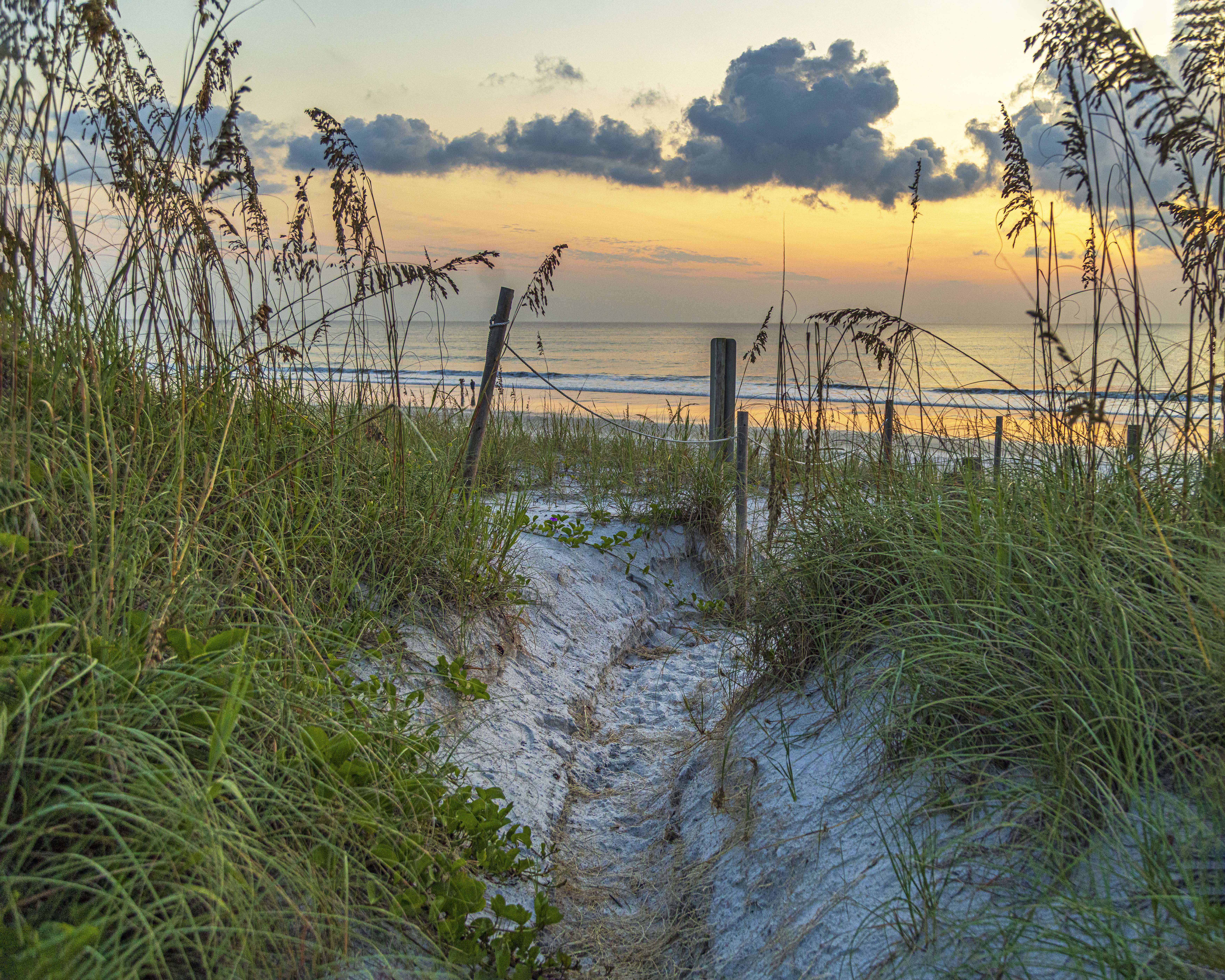
He arrives at the entrance to the beach during day’s first twilight, And, as occurs on occasion, the old man stops dead in his tracks And plants the base of his surf fishing rod in the sand While he beholds the majesty of the unfolding scene before him. The sun is still a few degrees below the horizon, Yet the sky and the calm sea glow with early gold, And night’s reign in the west begins to fade. . He lifts his rod and kicks loose the sand from its grip, Then takes the well-trod curving path to shore’s edge, Guided by the rope line that traces each turn, Shielding the tall grass that bends in the sea breeze as if in prayer. . Having cast his line, he sets his rod in its sand spike And watches intently the golden horizon for the sun’s silent arrival. As before, he is filled with a wondrous sense of heightened clarity, Allowing him to see himself both as a witness to a divine unfolding, And as a thread woven flawlessly within it.
It is October—autumn in Quebec City. Cold by day now, colder still by night. I stand alone in a square in the old town, Not far from the restaurant with our reserved table. I wait here for my wife and the couple Who joined us on this tourist-minded trip. The three moved on when my knee began to ache, Too stiff to match their steadier gait.
As I wait, my eyes settle on a stately window. Vines frame it, hugging the white-painted brick. Their leaves remind me of Virginia Creeper. (Could it grow this far north?) A flower box rests on the sill, A mix of annuals still in bloom, but just barely. I limp a few steps closer, pain flaring in my knee.
I am this Virginia Creeper — My bare vines cling as best they can, But some have let go and droop over the glass. My few remaining leaves dry in the afternoon sun, And soon will all glide down to the pavement below. Yet I’m proud of my tenacious remnants, Now regal orange and gold.
And I am the geranium, the petunia, the primrose, and arrowhead, Each of my blossoms now missing a few petals, Yet those that remain still holding their color, And their stems still reaching for the sun.
In both my poetry and photography of late, I allow myself to be influenced by a mystical notion of whispered promises — a notion of my own making. These promises offer a deeper understanding of the unseen and are hidden in plain sight in our everyday environment: in a gate or a door perhaps, or in a window or a quiet street that curves out of sight up ahead. They are most often overlooked, and even when we do sense their presence, they likely hover at the very edge of our grasp — like the faint sweetness of nectar on a honeysuckle stamen, a taste both there and not there at the same time.
Every poem of mine is accompanied by one of my photographs. I pair them to appeal to two modes of perception apropos one message.
My poetry is becoming more narrative in nature, and I have increasingly moved toward free verse to allow greater freedom of thought and to better approximate the rhythm of natural speech. My line lengths vary, as do the number of lines in each stanza, which I use solely as paragraph markers. Though I do not rely on full rhyme, I do look for opportunities to use slant rhyme–principally consonance (e.g., shape and show) and assonance (e.g., high and strike) — to enrich the rhythm and flow within lines. Finally, the subjects of my poems frequently unfold through extended metaphor.
I take all of my outside photographs in town just after sunrise because the light is best and the colors richest when the sun is low in the sky. Also, there are few people and vehicles out and about then, and I rarely want them in my photos. At home, when developing these shots in Photoshop, I want a sharp focus, vibrant colors, and pronounced contrast between light and dark. I push development in these three areas until I reach the border between real life and fantasy.
Unlike in town, when I am at the beach and facing east, I take my photographs when the sun is still below the horizon, because once the sun appears, the sky’s rich colors will bleach out. As a result, these photos are darker than those I take elsewhere, but I want that dreamy twilight appearance here,and I even tolerate a little softness in my surf to add to that dreaminess.
In sum, drawing from the above practices, I am exploring the relationship between everyday surroundings and heightened clarity — as well as an ensuing inner calm — should we choose to pay attention.