Whispered Promises

Artist’s Statement by Dean C. Stecker (9/2025)

In both my poetry and photography of late, I allow myself to be influenced by a mystical notion of whispered promises — a notion of my own making. These promises offer a deeper understanding of the unseen and are hidden in plain sight in our everyday environment: in a gate or a door perhaps, or in a window or a quiet street that curves out of sight up ahead. They are most often overlooked, and even when we do sense their presence, they likely hover at the very edge of our grasp — like the faint sweetness of nectar on a honeysuckle stamen, a taste both there and not there at the same time.

Every poem of mine is accompanied by one of my photographs. I pair them to appeal to two modes of perception apropos one message.

My poetry is becoming more narrative in nature, and I have increasingly moved toward free verse to allow greater freedom of thought and to better approximate the rhythm of natural speech. My line lengths vary, as do the number of lines in each stanza, which I use solely as paragraph markers. Though I do not rely on full rhyme, I do look for opportunities to use slant rhyme–principally consonance (e.g., shape and show) and assonance (e.g., high and strike) — to enrich the rhythm and flow within lines. Finally, the subjects of my poems frequently unfold through extended metaphor.

I take all of my outside photographs in town just after sunrise because the light is best and the colors richest when the sun is low in the sky. Also, there are few people and vehicles out and about then, and I rarely want them in my photos. At home, when developing these shots in Photoshop, I want a sharp focus, vibrant colors, and pronounced contrast between light and dark. I push development in these three areas until I reach the border between real life and fantasy.

Unlike in town, when I am at the beach and facing east, I take my photographs when the sun is still below the horizon, because once the sun appears, the sky’s rich colors will bleach out. As a result, these photos are darker than those I take elsewhere, but I want that dreamy twilight appearance here, and I even tolerate a little softness in my surf to add to that dreaminess.

In sum, drawing from the above practices, I am exploring the relationship between everyday surroundings and heightened clarity — as well as an ensuing inner calm — should we choose to pay attention.

Storm Prep

.

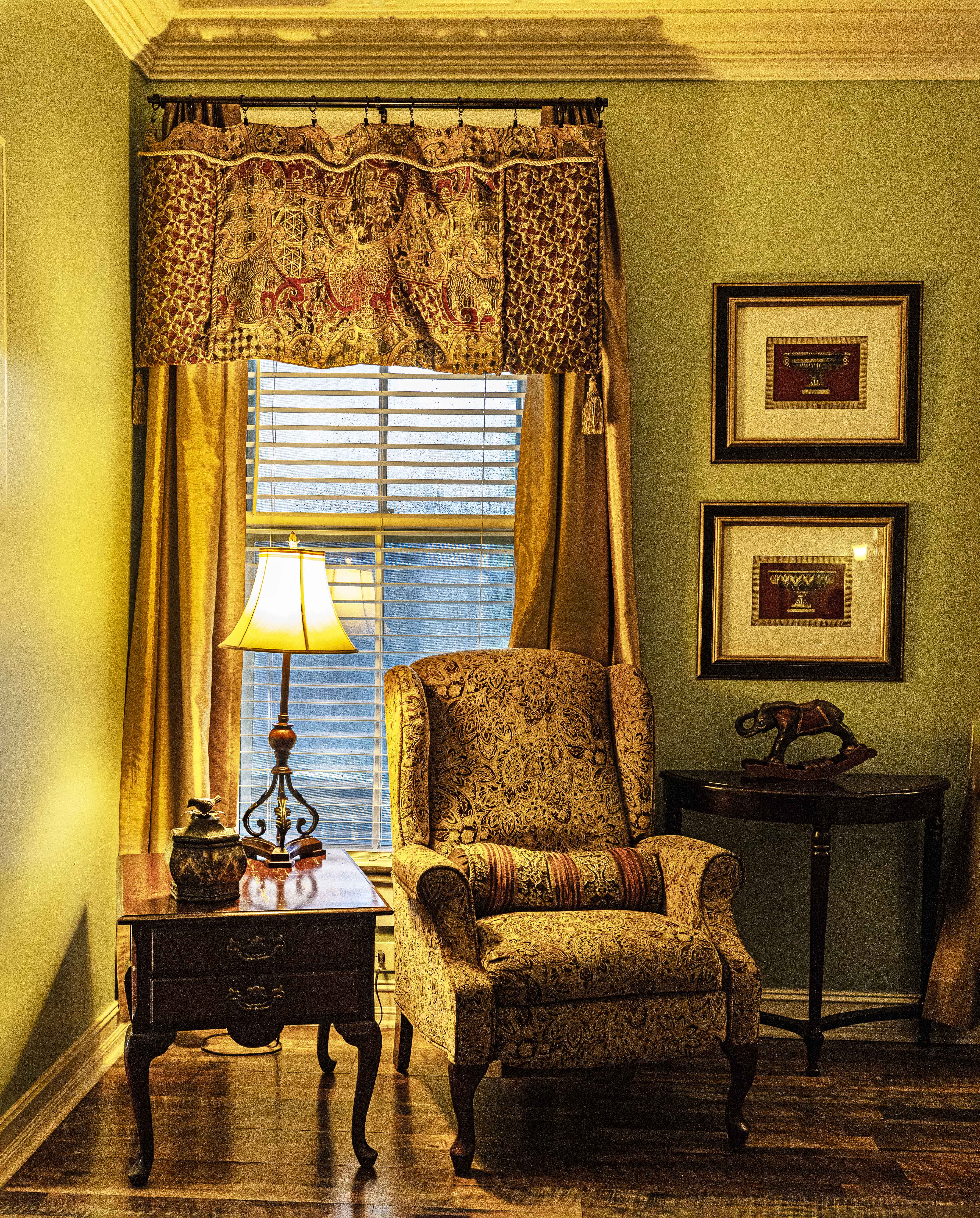
Thunder surprise-explodes just outside the window,

Followed forthwith by a lightning bolt

Which briefly brightens the room.

Adrenalin courses through his body,

Even as the flashed light yields to the prior gloom.

Now he can clearly hear the rain:

First, stray drops tapping at the window,

Then an incessant drumming on the glass.

.

The storm is predicted to linger two hours.

With four plus inches of rain expected.

The historic district can assume severe flooding.

So, there’ll be no Uber tonight, no tram, no walking,

No fancy restaurant (No dinner for two at all, anywhere!),

No publicized chamber music at the cathedral,

No slow stroll, hand in hand on the sea wall.

Our every shared decision made,

So long planned, now washed away.

.

He slow-deep breathes to calm himself

(In through the nose, out through the mouth).

His hand reaches for the jar beside him:

How good these chocolates, he is reminded,

And how comfortable this old chair.

The Garden behind the Red Door

,

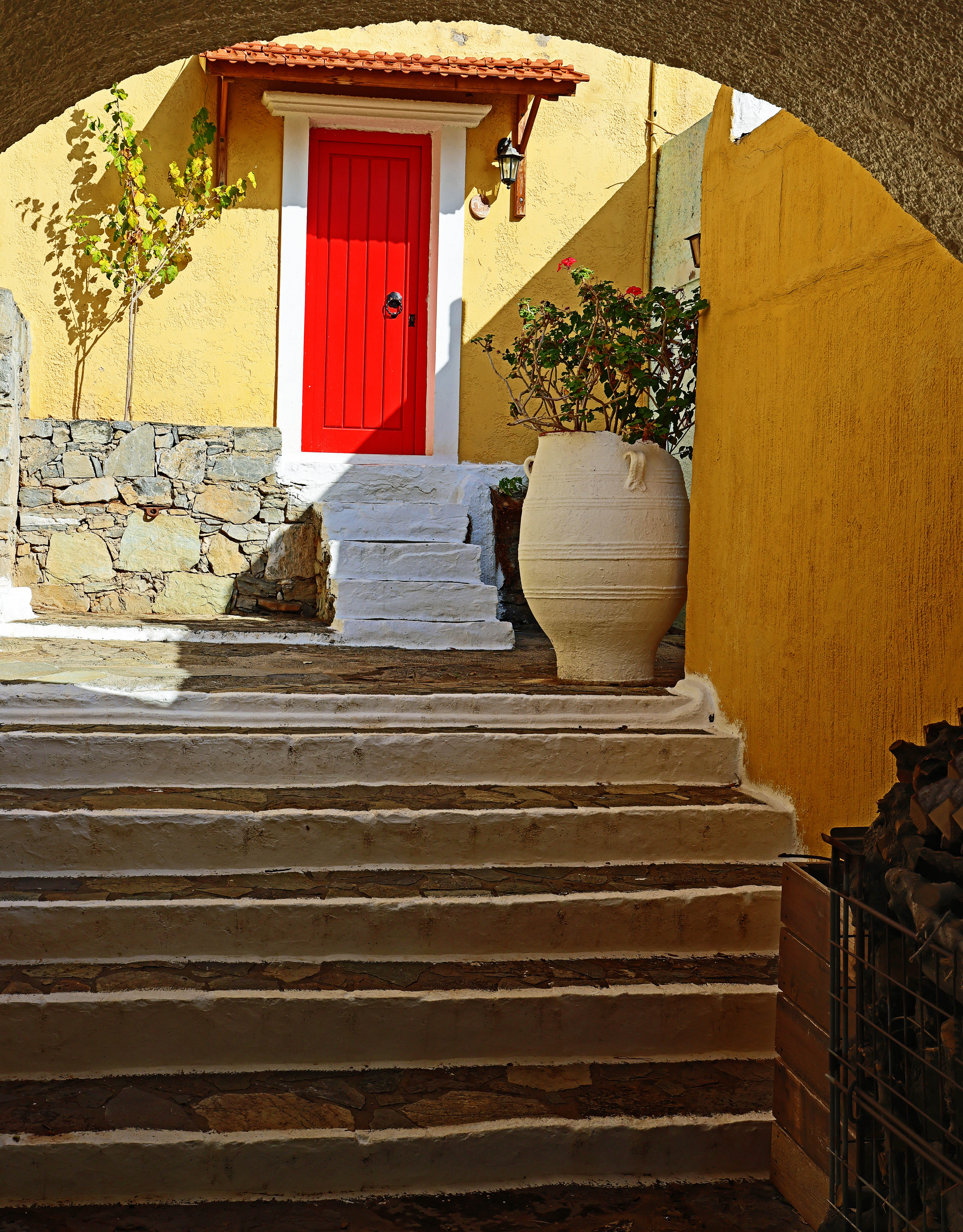
The woman pauses at the always closed red garden door

Every time she takes her sunrise summer stroll.

There, she closes her eyes, ever the same as the time before,

And in so doing, imagines a garden in her own mind,

A garden she believes matches the one behind the door.

And her creation becomes more detailed each visit:

Now she can identify specific plants,

All perennials, all healthy, no browned branches visible.

And now she sees the well placed paths,

Making each garden area easily reached.

And now the plants are purposefully and pleasingly grouped,

Shorter plants at garden’s edge, the taller toward the rear.

And now she can sense the gardener’s love,

For the plants are well watered, the bare soil weed free.

Over that spring and summer, she recreates the garden at home,

And should she, during some future stroll,

Perceive an adjustment behind the red door,

An identical change in her own garden follows,

A garden that is now, in turn, a lure of local passerby.

Spring Inventory of a Southern Garden

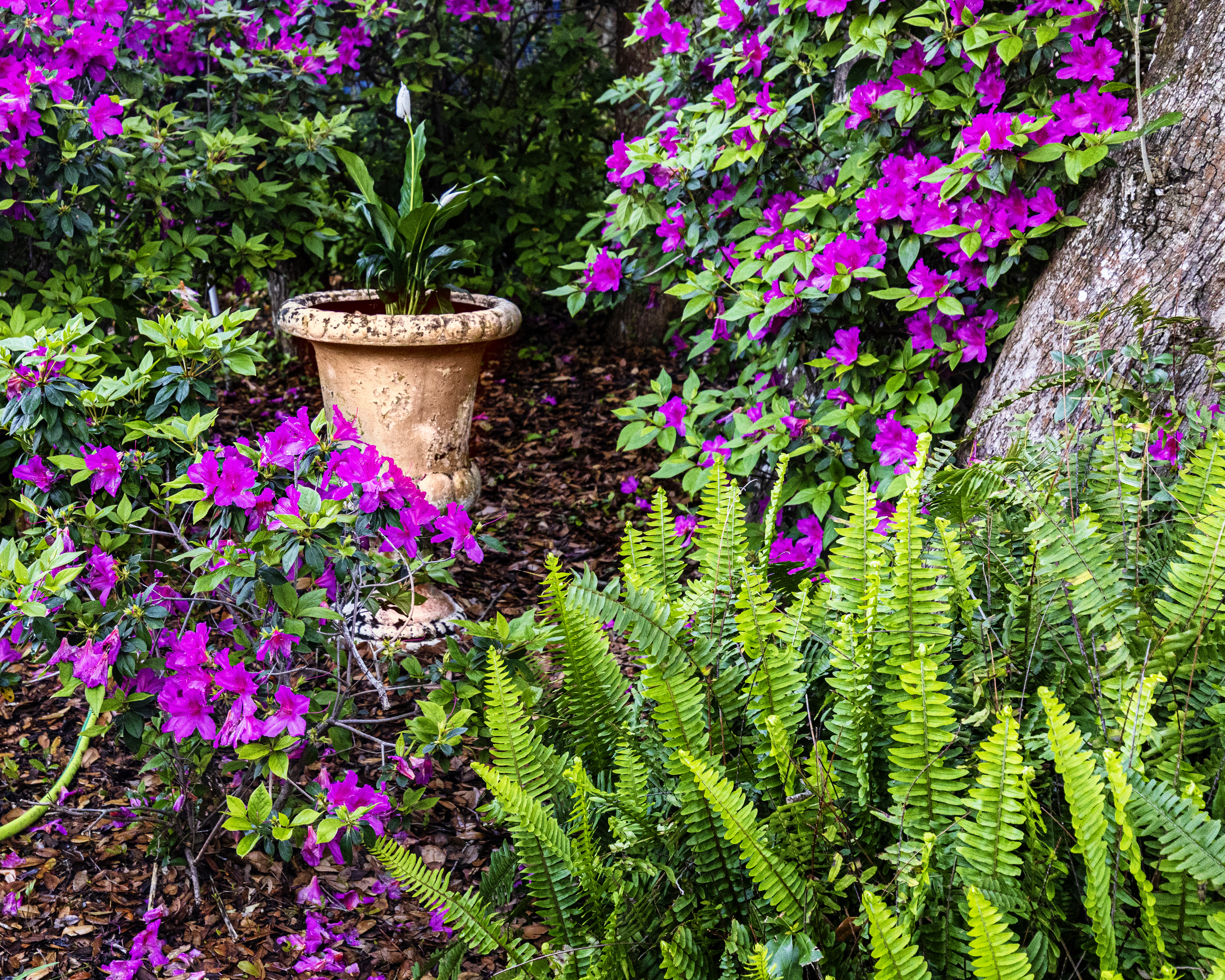
The potted peace lilies are small but bloom brightly

And might just last through the fall, he thinks.

Now, these ferns would have multiplied and spread too far

Had he not thinned them last fall, arresting their advance instead.

And the magenta azalea grip holds tight still,

Though their petals will fall by the fortnight.

As for the aged gardener, he’s slower to clip this spring, slower to dig,

Slower to bend and to kneel, concerned he might slip.

Yet he just might last through the fall, he thinks.

Hero’s Journey

,

Tested by the steep hill’s hike

In the sun’s heat of midday,

Then dismayed by the long tunnel’s darkness

— Shuffle walking and flashlight guided —

She pauses at tunnel’s end,

Hands-on-knees exhausted.

.

There stands the red door, her ninth this month,

Five steps up and then five more.

Regaining sufficient stamina,

She continues her ascent with fingers crossed.

She dreads a tenth disappointment,

But she’ll turn the knob just the same.

Regarding Wooded Journeys

.

Some paths turn this way and that and a few circle back.

For others the direction rarely varies much.

Some canopies let in some sun to dapple the pathway.

Others, thicker, lay down uninterrupted blanket-shade.

Some paths vanish abruptly, perhaps just past a bend.

Some go on and on, seemingly without end.

Synchrony

Each week, once the sheets are dry,

And I am on one side and my wife the other,

We remake the bed in harmony

As we slip on the pillowcases

And stretch the bottom sheet corners,

Then again as we tuck in the top sheet

And smooth the quilt,

And last as we fix the pillows at bed’s head

And center the knitted throw at its foot.

One might say that for a half-century and more

We have made our bed, and we lie in it still.